
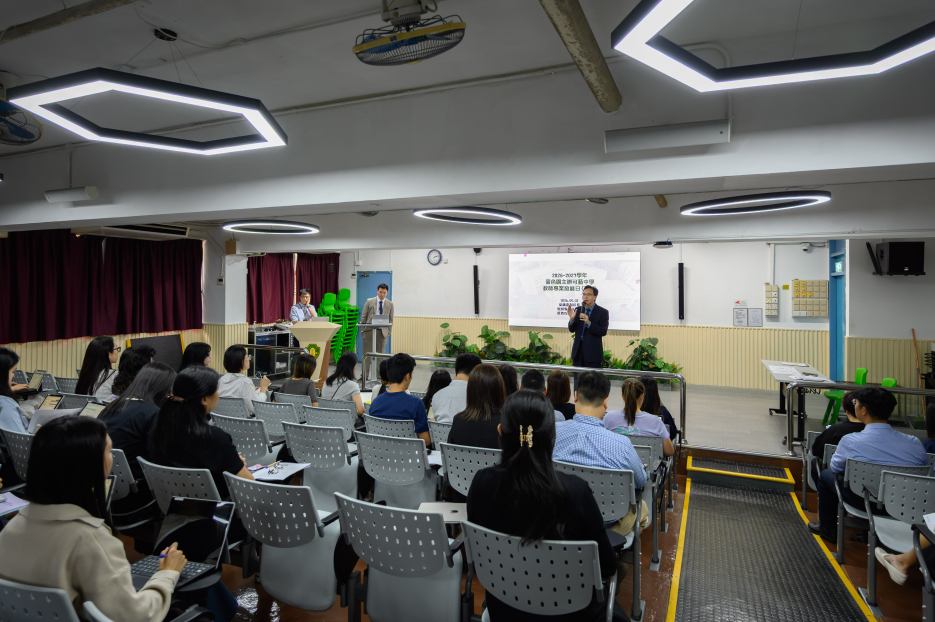
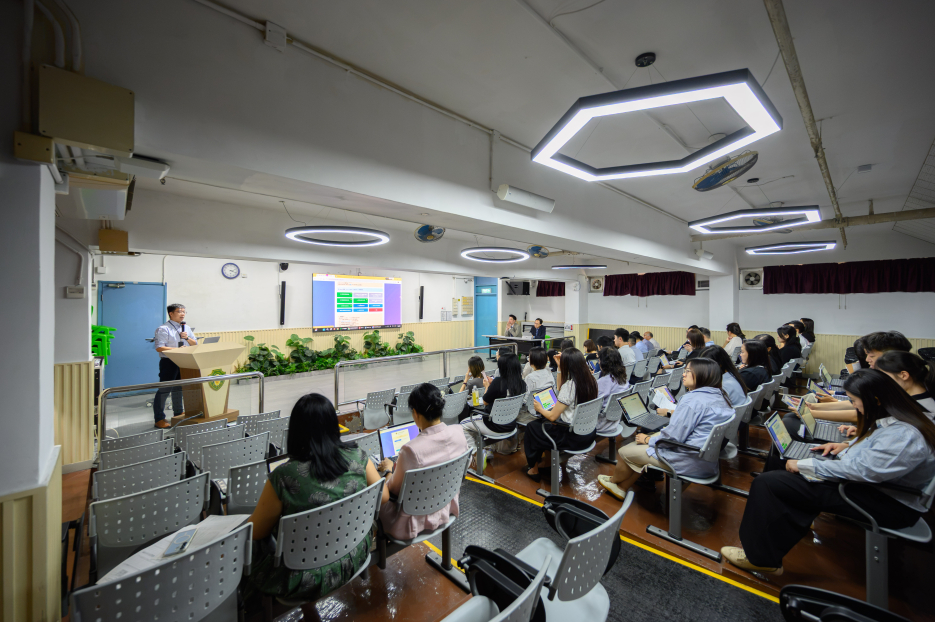
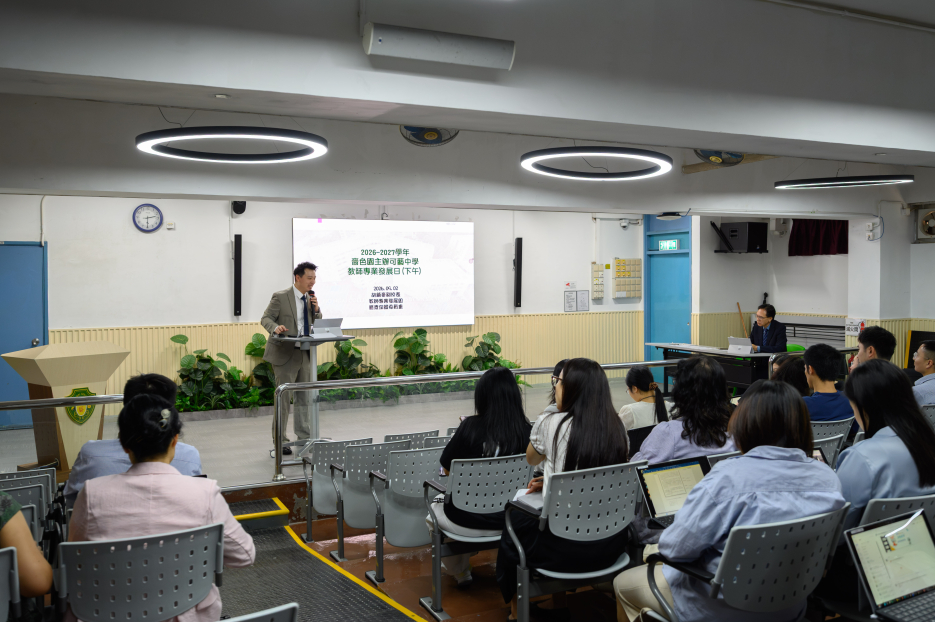
To continuously enhance teaching quality and strengthen school development planning, our school successfully held the first Teacher Professional Development Day of the 2026–2027 academic year on the afternoon of 2 September 2026. Organised by the Teacher Professional Development Team (Quality Assurance Committee), the event aimed to deepen teachers’ understanding of External School Review (ESR) and the School Self-evaluation (SSE) framework, while exploring strategies to further improve classroom teaching and student learning outcomes.
The first session was led by Mr. Tam Chi Wai, who introduced the school-developed Quality Management System (QMS). He also demonstrated how teachers can access students’ attendance records through the eClass platform. These system enhancements help improve administrative efficiency, enabling teachers to monitor and follow up on students’ attendance and learning progress more accurately and promptly.
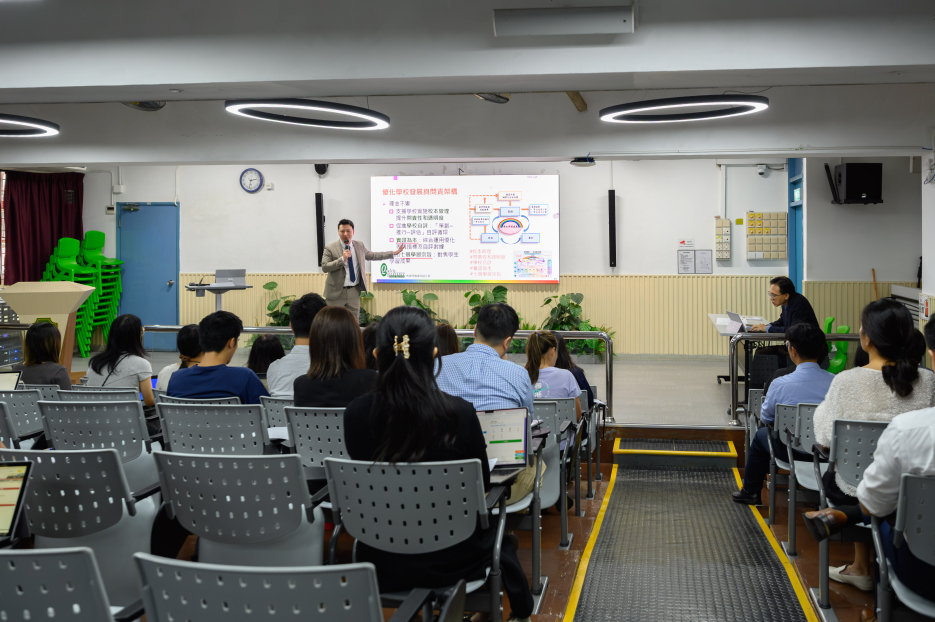
Vice Principal Mr. Wu Chun Ho then provided a comprehensive overview of the External School Review (ESR) framework and revisited the key findings of the previous ESR report conducted in 2013. He emphasised that schools should use the “Seven Learning Goals” as key focal points for self-reflection, together with the Hong Kong School Performance Indicators and school-based data, such as stakeholder survey results and value-added information, to evaluate the effectiveness of promoting students’ whole-person development.
Mr. Wu highlighted the importance of implementing the “Planning–Implementation–Evaluation” (PIE) cycle, which enables schools to adopt an evidence-based approach to self-evaluation and drive continuous improvement in a systematic manner.
Regarding learning and teaching, Mr. Wu elaborated on the school’s lesson observation criteria for self-evaluation. The focus was placed on how instructional design can better cater to learner diversity. During the training, teachers were encouraged to employ differentiated questioning techniques and heterogeneous grouping strategies, while providing students with adequate thinking and response time.
Teachers were also reminded to incorporate meaningful discussion and collaboration into group activities and to provide timely, constructive feedback. These practices help deepen students’ thinking, encourage active participation, and build their confidence in learning.
The final session focused on the criteria for reviewing student learning outcomes. The school introduced a new Student Learning Outcomes Review Form to standardise and enhance assignment monitoring practices.
Mr. Wu reminded teachers to ensure that learning tasks are closely aligned with learning objectives and pitched at an appropriate level of difficulty. Teachers were also encouraged to adopt a variety of assessment methods. In marking students’ work, teachers should not only maintain good marking practices but also provide specific, positive, and learning-oriented feedback. Follow-up on students’ corrections is equally important, as it helps them learn from mistakes and improve their performance.
Through this Professional Development Day, our teaching staff further strengthened their shared understanding and gained greater clarity regarding the future direction of learning and teaching development. The school will continue to promote a culture of self-evaluation, enabling teachers to focus on quality teaching and student care while working together to fulfil the school’s educational mission.








 Back to Latest News index